




Approvals That Follow the Work, Not the Other Way Around: Bringing Approval Path to Slack
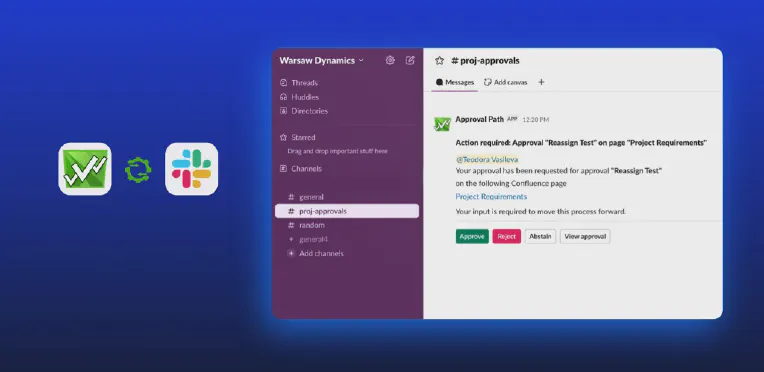
Approval processes often fail not because the workflow is wrong, but because the decision gets lost between tools, tabs, inboxes, and busy schedules. They are rarely the “main task” someone is doing, and they sit between product releases, document reviews, budget confirmations, access decisions, content publishing, or process checkpoints. The problem is not always the approval itself as a separate, time-consuming action, but rather that the request often lives elsewhere.
Reduce approval fatigue without reducing control: consent vs approval
In many organizations, “approval” has quietly become the default language of decision-making. Documents are sent for approval, tasks are routed for approval, and even low-risk changes are expected to pass through layers of formal sign-off. At first glance, this approach feels responsible - after all, more approvals should mean more control. But over time, a different pattern emerges. When everything requires approval, people stop treating approvals as meaningful decisions. Stakeholders click through requests quickly just to keep work moving.

'Adoption is the Most Important Part of Implementing the Tool' - Envorso Customer Success Story
We had the pleasure of sitting down with William and Filip from Envorso , an Atlassian Gold Solution Partner and consulting firm specializing in enterprise agility, digital transformation, and operational excellence. During the interview, they shared insights into how Approval Path for Confluence helped one of their clients solve critical challenges during a large-scale documentation migration to Confluence. Watch the full interview here: For those who prefer reading or are unable to watch the video at this time, we have prepared an interview summary below.

5 Blockers Slowing Down Your Confluence Approvals and How to Fix Them with Approval Path
Confluence includes a built-in Automation feature that allows admins to create rules for actions like sending notifications, changing page status, or triggering events based on page updates. More recently, Atlassian introduced Smart Buttons as a way to make automation more accessible, letting users trigger those rules manually from a page. However, the usage is directly tied to your automation usage quota, which depends on your Confluence plan. If you’ve tried building approval workflows using Confluence’s native features alone, you may have already run into some of these challenges.

Document Approval Workflows in Confluence: Approval Path vs. Comala Document Management
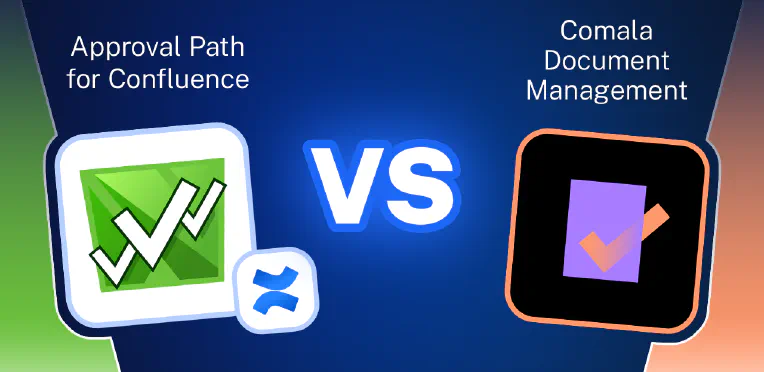
Effective document workflow management is a cornerstone of successful collaboration in modern organizations. Whether it’s publishing knowledge base articles, handling legal contracts, customer-facing proposals, or internal compliance documents, having a clear, well-defined approval process is essential. Without it, teams risk publishing outdated, incorrect, or non-compliant content. Fortunately, there are convenient tools available for Confluence that help organizations streamline and control their content approval processes. In this article, we’ll explore two of the most popular apps that enhance Confluence with structured approval workflows: Approval Path for Confluence and Comala Document Management.
How to Improve Content Reviews in Confluence with Approval Path
In today’s article, we’ll cover why having an approval process for Confluence pages matters, how to create your own approval process using Approval Path for Confluence , and share a real-life example from our Warsaw Dynamics team! Why Set Up an Approval Process for Confluence? Without an approval step, content can be published before it’s ready. Documents may include sensitive data, outdated information, or content that hasn’t been reviewed by the right people.

Get Your Team’s Vote in Approval Path for Jira!
Approval Path for Jira helps you build flexible approval workflows directly within your Jira environment. With this app, teams can easily manage Jira issues approvals from start to finish. You can find an Overview of Approval Path for Jira, including its key features and screenshots, on our website. Vote Step in Approval Path We recently added a new feature: Vote Step which is available in Approval Path for Jira and Confluence!

Better Way to Handle Document Approvals in Confluence
If your company works in Confluence, you’re probably handling a lot of important documents like product specifications, technical documentation, internal policies, and more. And in the process, there’s a lot to keep track of. For example, who needs to approve it? In what order? How do you track the latest version? And what happens next? Many teams rely on emails to request approvals, but as our customers often tell us, threads of emails are a nightmare!

Build a Smarter Workflow with Approval Path for Confluence
Review Confluence Page Efficiently Does your organization require Confluence page approvals for documentation reviews or content management purpose? Implementing an approval workflow in Confluence involves defining specific states that a page transitions through during its lifecycle. These states help manage content creation, review, and publication processes. While Confluence doesn’t offer a built-in approval workflow feature, you can establish a structured process using Approval Path for Confluence, an add-on developed by Warsaw Dynamics.

Introducing Success & Rejection Steps
At Warsaw Dynamics, we are continually refining Approval Path based on our customers’ feedback, so we can make their workflow flawless. We have introduced Rejection Step previously, and now we have released the Success Step for both Approval Path for Jira and Confluence. In this post, we will explain what these steps are, with some use cases, showing you how they can help Approval Path process more efficiently based on the application version for Jira.