





AI Agents Don’t Visit Atlassian Team ’26. We Did.
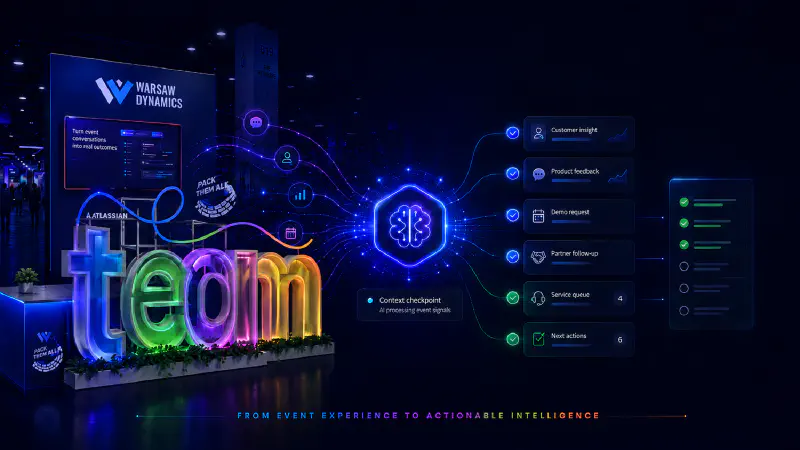
Our team is back from its first official (and full 3-day) sponsorship at Atlassian Team 2026 US.
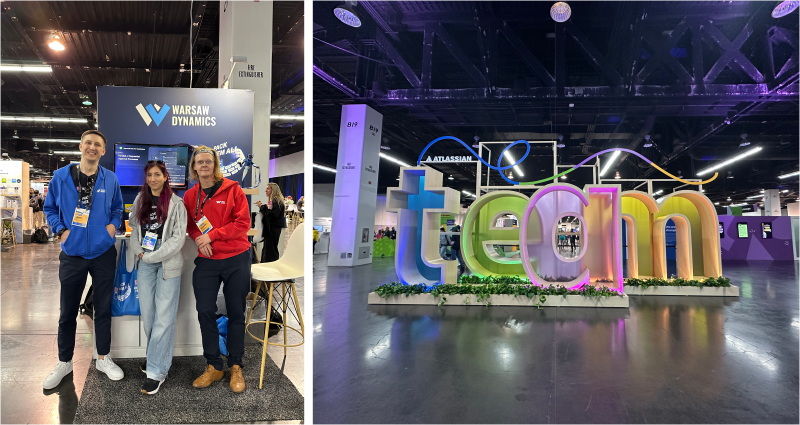
For anyone developing apps for the ecosystem, it is no secret that Team is the biggest opportunity to meet existing and potential customers and partners, drink from the well of technical innovation, learn news first, and gain knowledge from best-in-class speakers and tech aficionados.
So here we were, two Poles and one Bulgarian, on our way to the Expo
Hall.
How expectations are still not a reality
Yes, Team ‘26 was full of AI momentum. Atlassian talked about context, intelligence, agents, service automation, product feedback, and the future of connected work.
But here is the thing: AI agents do not attend conferences.
They do not stand at the booth or notice how people move through the Expo Hall. Or carry swag through airports. So instead of writing a standard event recap, we decided to look at Team ‘26 through the critical lens of evolving tech vs. the common human struggle when planning, * execution*, and success rate are goals that are rarely in sync.
We arrived safe and sound, but what the hell happened?
Atlassian framed its new operating formula as Acceleration = Context × Intelligence.
Teodora framed it similarly when choosing an Airbnb spot near the venue.
Only to realize that this near spot is not-so-near because Airbnb hid the real location due to "
security" reasons. Moral of the point: your system of work brilliance may suffer the consequences of
an outside impact, so validate across multiple sources before committing.
Content is infrastructure: separate wasteful from useful marketing
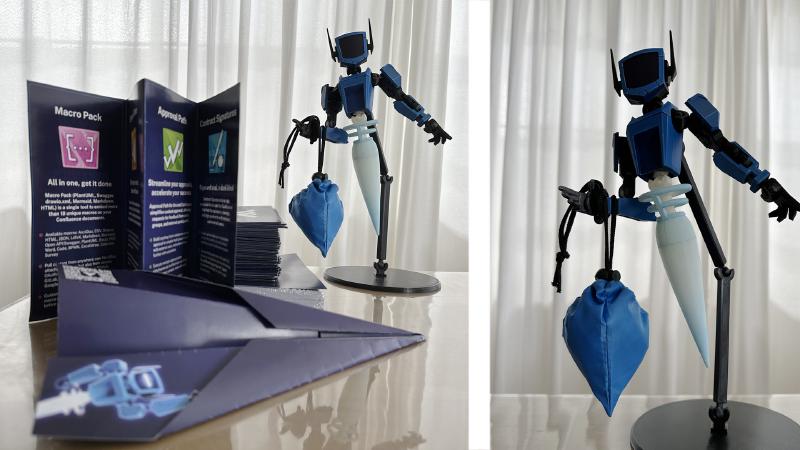
We’ve built our Team26 concept multiple times, going above and beyond with suggestions for printed materials, swag, and gamified onsite activities. But then we flipped the coin, realizing that these assets are not just marketing; they are our event infrastructure, and we should utilize them as such.
“Is it efficient to have so much swag”?
“Is a gamified event help us boost conversations, or will it just gather a crowd with zero interest
in our products?”
“Do we have enough space in our luggage for all of this!?”
We learned that Rovo is getting more and more useful in turning existing context into a more useful format. So we did the same, turning existing assets into the most efficient way to present ourselves while keeping costs and transport headaches low.
Lead count is not the whole story
Atlassian introduced Product Collection with Jira Product Discovery, Feedback, Rovo, and product analytics integrations to help product teams connect customer signals to product decisions.
Truth said, we had fewer leads than desired, but the more valuable question is: what kind of signal did we get? Some of the most valuable moments were not anonymous badge scans. They were existing customers who came to the booth and told us what they needed next.
A low lead count is disappointing. A lost customer insight is worse.
Your quietest salesperson
That may seem a bit obvious, but Atlassian talked a lot about meeting people where work happens. At the booth, the same rule applies: meet attention where it happens.
Our booth screen presentation was supposed to be a Hollywood-worthy piece of art, but due to time constraints and workload, we ended up with… ugh, basically nothing until the very end. So, a day before Team, we rolled up our sleeves and created a simple presentation that highlights specific app features and customer pain points.
People looked at it. Some conversations started from it. That tells us something important: not every visitor wants to be approached first. Some need a visual hook before they decide the booth is relevant.
Event follow-ups: service thinking instead of mandatory automation
Atlassian’s Service Collection announcements focused on AI-powered service work across Jira Service Management, Customer Service Management, Assets, and Rovo agents, with Rovo Service and Rovo Ops positioned around faster resolution and clearer action.
After an event, everything becomes a service request in disguise:
someone wants pricing
someone wants a demo
someone has a feature request
someone wants partner cooperation
someone needs technical clarification
One thing we should borrow from service management is the idea that every request needs routing, ownership, status, and resolution. Event follow-up should not be a spreadsheet that slowly dies after everyone returns home tired. It should be treated like a service queue.
In conclusion, Team ‘26 gave us product announcements, ecosystem direction, AI momentum, and a clearer view of where Atlassian is going.
But it also gave us something more useful: a mirror.
Atlassian talked about context - we experienced what happens when a decision is made with incomplete context: the accommodation looked close enough before booking, but the real location changed the daily logistics of the event.
Atlassian talked about feedback and product intelligence - our best conversations came from existing customers telling us what they need next.
Atlassian talked about service and strategy - we realized our event follow-up and sponsorship evaluation needs to become more structured, more connected, and less dependent on memory.
Events are still deeply human. AI will not replace the booth conversation, the customer insight, or the judgment call. But it can make the entire system around the event more prepared, more connected, and less chaotic.
If our time at Atlassian Team ‘26 taught us anything, it is that intelligence is only useful when it becomes action.
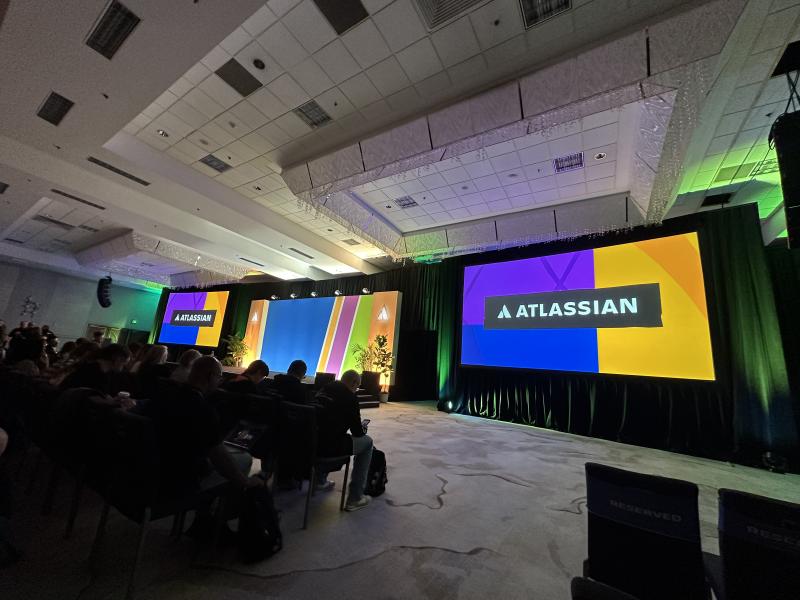
Curious how we would implement all of our findings? Keep an eye on us here.