




Approvals That Follow the Work, Not the Other Way Around: Bringing Approval Path to Slack
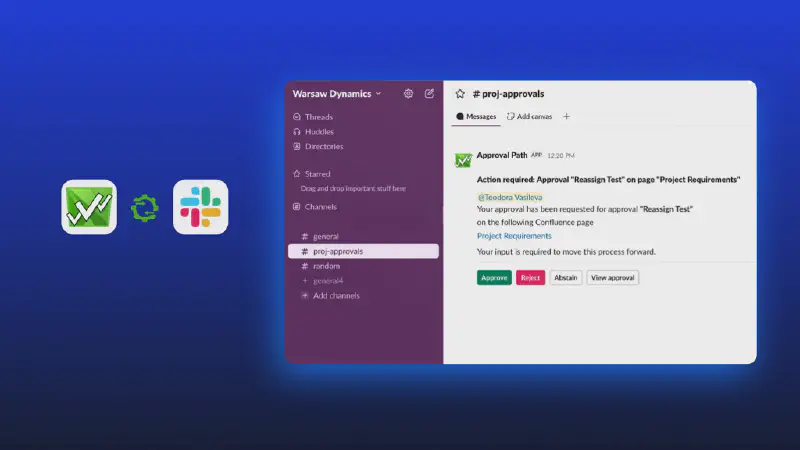
Approval processes often fail not because the workflow is wrong, but because the decision gets lost between tools, tabs, inboxes, and busy schedules. They are rarely the “main task” someone is doing, and they sit between product releases, document reviews, budget confirmations, access decisions, content publishing, or process checkpoints.
The problem is not always the approval itself as a separate, time-consuming action, but rather that the request often lives elsewhere. A team member has been assigned as an approver, and they first have to receive a notification in their email inbox, open Jira or Confluence, find the correct approval, understand the context, and act before the team can continue.
We created Approval Path for Jira and Confluence to reduce unnecessary friction, improve collaboration, and shorten the approval process within the organization. Now we are moving a step forward and bringing the decision point directly into the communication space where most teams already collaborate: Slack.
Approvals no longer happen between tools
For Jira, approvals often block operational work: tasks, change requests, issue progress, and delivery decisions. In Confluence, approvals often protect the quality of knowledge: documentation, policies, procedures, specifications, and internal pages. In both cases, the approval decision is important, but the approver may not be actively working inside Jira or Confluence when the request arrives.
Slack is where many teams already discuss, clarify, coordinate, and make quick decisions. So bringing Approval Path notifications into Slack reduces the distance between awareness and action.
What the Approval Path <-> Slack integration changes
The Slack integration changes Approval Path in a very practical way: it brings approval work closer to the moment when people are already paying attention.
Before this integration, an approval request could be perfectly configured inside Jira or Confluence and still wait longer than necessary. Not because the workflow was unclear. Not because the approver did not care. But because the request lived in a different place from the team’s daily communication. An approver might be discussing the work in Slack, following project updates in a channel, replying to teammates, or moving between meetings. Meanwhile, the actual approval request waits somewhere else: in Jira, in Confluence, in an email inbox, or behind another browser tab.
The Slack integration reduces that distance.
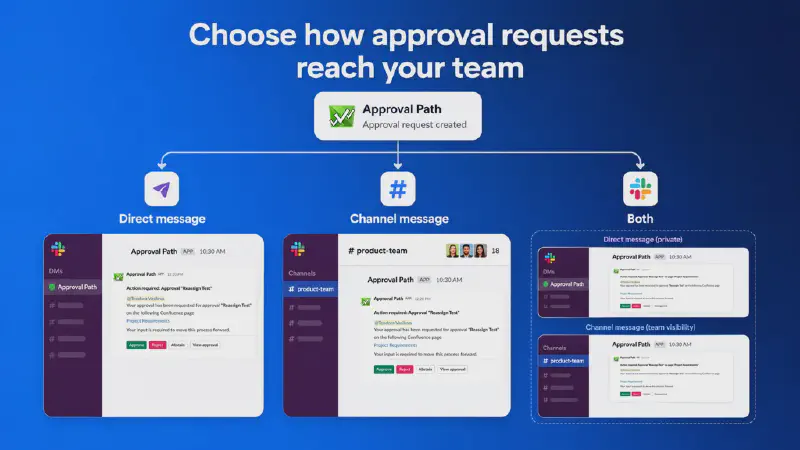
Approval Path can now send approval notifications directly to Slack as direct messages, channel messages, or both. This means teams can choose the delivery style that best fits how they work. A private approval request can arrive as a direct message. A team-visible approval can be posted in a channel with the right approvers mentioned. A higher-priority approval can use both, so the approver receives a personal notification while the team also gets visibility. To go even further, with Approval Path’s ability to allow external users to approve content, Slack users without an Atlassian ID can approve, consent, or vote on approvals they’ve been assigned to only by using their Approval Path user account.
But the important change is not only where the notification appears. It is what the approver can do with it. When interactive actions are enabled, Slack becomes more than a notification channel. Approvers can approve, reject, abstain, or vote directly from the Slack message. Instead of receiving a reminder, opening another tool, finding the approval, and then recording the decision, the approver can act while the request is already in front of them.
For Jira approvals, this can help unblock work items faster. A task, change request, review, or operational decision does not have to sit quietly while the team waits for someone to notice the approval request (see more about this integration on Approval Path for Jira documentation ).
For Confluence approvals, this can help documentation, policies, procedures, and knowledge pages move through review without unnecessary chasing. The page still lives in Confluence, where the content belongs, but the approval request can reach the approver in Slack, where the team’s attention often is (see more about this integration on Approval Path for Confluence documentation ).
And if something goes wrong, the mechanism simply changes to email, so your team is informed, and no information is missed.
The real change is not “Approval Path now sends Slack messages.” The bigger change is that approvals become easier to notice, easier to act on, and easier to follow. They move from being a separate administrative step into the communication flow, where teams already coordinate their work.
That is the meaningful shift we aimed for. Approval Path for Jira and Approval Path for Confluence still keep the structure, control, and auditability of a formal approval process. Slack adds immediacy, visibility, and convenience.
Together, they make approvals feel less like a bottleneck and more like a natural decision point inside the way teams already work.