





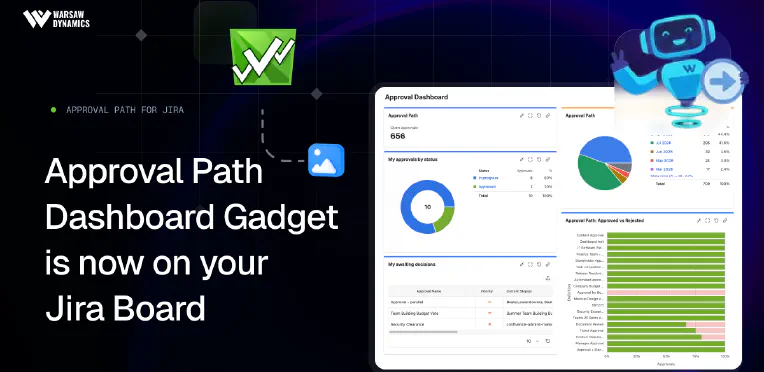
Better Approval Visibility: Approval Path for Jira Comes to Your Jira Dashboard
Approval workflows are made to define what needs to happen next: Who needs to approve? In what order? Under which conditions? What happens after a decision? But even the best-designed process can slow down for a very ordinary reason: someone simply doesn’t notice that an approval is waiting for them. A request sits pending. Someone asks for an update, and another person checks whether the approver has seen it. A perfectly structured workflow suddenly involves a surprising amount of chasing.
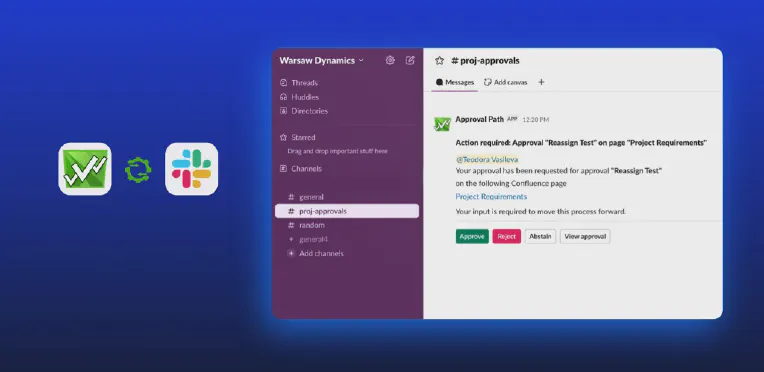
Approvals That Follow the Work, Not the Other Way Around: Bringing Approval Path to Slack
Approval processes often fail not because the workflow is wrong, but because the decision gets lost between tools, tabs, inboxes, and busy schedules. They are rarely the “main task” someone is doing, and they sit between product releases, document reviews, budget confirmations, access decisions, content publishing, or process checkpoints. The problem is not always the approval itself as a separate, time-consuming action, but rather that the request often lives elsewhere.
How to Centralize Approval Auditing and Eliminate Cross-Checking in Jira
Why Audit Trails are Essential in Modern Jira Use An audit trail is a chronological record of all system activity, showing who performed each action, when, and how. In Jira, the history report serves as a mark of trust. As collaboration extends to external vendors, partners, and clients, a strong audit trail becomes essential for accountability and regulatory compliance. This is particularly crucial for decision-making processes, where capturing evidence of a manager’s sign-off or a legal team’s approval is critical to proceed.

Advanced Approval Templates for Jira: Streamlined Processes and Full Transparency
For years, Jira teams have improvised approval workflows using statuses, comments, checklists, or custom fields. As work becomes increasingly cross-functional - involving legal, finance, procurement, and external collaborators - approval steps have become more critical to governance, compliance, and operational clarity. To address this growing demand, Atlassian has recently begun rolling out native approval features in Jira Cloud - a sign that they’re listening closely to customer needs and evolving Jira beyond simple task management into a structured decision-tracking system.

Guest Accounts for Jira: Why Wait When You Can Collaborate Securely Today?
There’s been a lot of buzz lately around the possibility of Guest Accounts for Jira Cloud - a new way to invite external users into your instance without granting full licenses. It sounds great on paper. After all, Confluence already offers a Guest Account feature, and it’s natural to expect Jira to follow. But here’s the truth: while Atlassian might eventually roll out some form of guest access, you don’t have to wait to collaborate securely with external stakeholders.

When “Peak Billing” Comes Knocking: How to Manage Atlassian’s New Pricing with Smarter Sharing
If you are not living under a stone, you must have heard about Atlassian’s new pricing model. This October, they introduced the “maximum quantity billing” (MQB) - a major shift in how customers are billed. This change is intended to provide more predictable costs and simpler tracking for budgeting and planning. But, at the same time, customers will need to manage user licenses carefully to optimize costs, especially if user counts fluctuate frequently within a month.

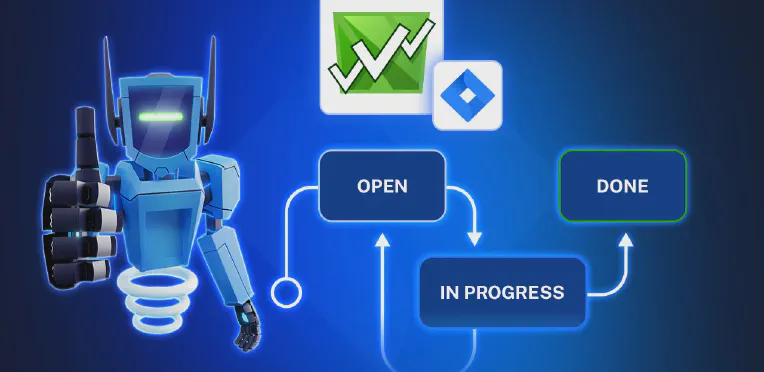
How to Connect Jira Workflows with Approvals
Approval Path for Jira X Jira Workflows At Warsaw Dynamics, many of our clients have asked how to manage approvals more effectively within their Jira workspace. In this article, we’ll explain how Approval Path for Jira integrates directly with Jira’s workflow engine and how to apply key features to a real project scenario. Jira Workflows in a Nutshell Many companies are using Jira for structured task management. Each project or team may have its own way to track and complete work.
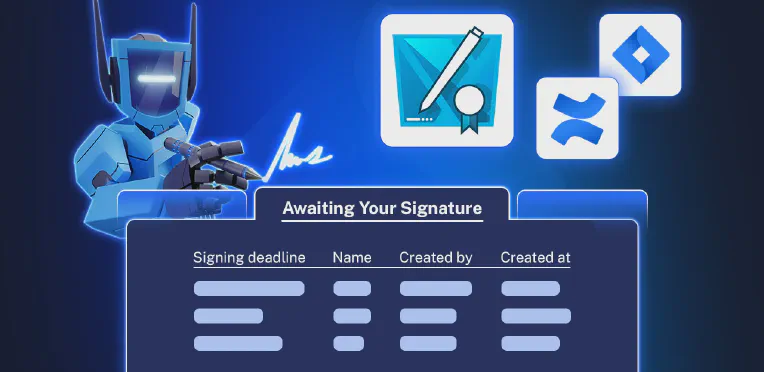
Easily Create Contracts in Jira or Confluence, Keep Track of Everything in Your Workspace
What Is Contract Signatures? Contract Signatures is an app available for Jira and for Confluence that lets teams create, send to internal users or to external user and sign contracts. Whether you’re in project management (Jira) or documentation and collaboration (Confluence), the app makes contract handling simple and connected. There are two separate apps: Contract Signatures for Jira Contract Signatures for Confluence How to Create Contracts in Jira or Confluence You can find full instructions in our documentation, but here’s a quick overview:
No Jira Account? No Problem. Here’s How to Vote on Work Items via External Share for Jira
Moving Beyond Jira’s Native Upvote Feature Voting feature helps you quickly gather feedback and prioritize work. Jira’s built-in voting lets internal users signal which work items (issues) are important by selecting the Vote button on a Jira work item. The total number of upvotes can then be seen by anyone with access to that work item. It’s simple, but limited. There’s no downvote option, and external users can’t participate.

Get Your Team’s Vote in Approval Path for Jira!
Approval Path for Jira helps you build flexible approval workflows directly within your Jira environment. With this app, teams can easily manage Jira issues approvals from start to finish. You can find an Overview of Approval Path for Jira, including its key features and screenshots, on our website. Vote Step in Approval Path We recently added a new feature: Vote Step which is available in Approval Path for Jira and Confluence!